Why learning photography outdoors accelerates your progress
Many beginners try to improve their photography by watching tutorials or practising alone at home. They experiment with camera settings, read about composition or study examples online. Yet when they finally go outside with a camera, many of the same doubts appear again.
Photography decisions happen in real situations
Photography is not only about understanding concepts. It is about making decisions in front of a scene that is constantly changing. Light shifts, people pass, shadows appear, and the background keeps evolving.
When learning happens in that environment, decisions stop being abstract. Moving a few steps can simplify the frame. Changing position can transform the background. Waiting a moment can alter the light. These small adjustments reveal how photographs actually take shape.
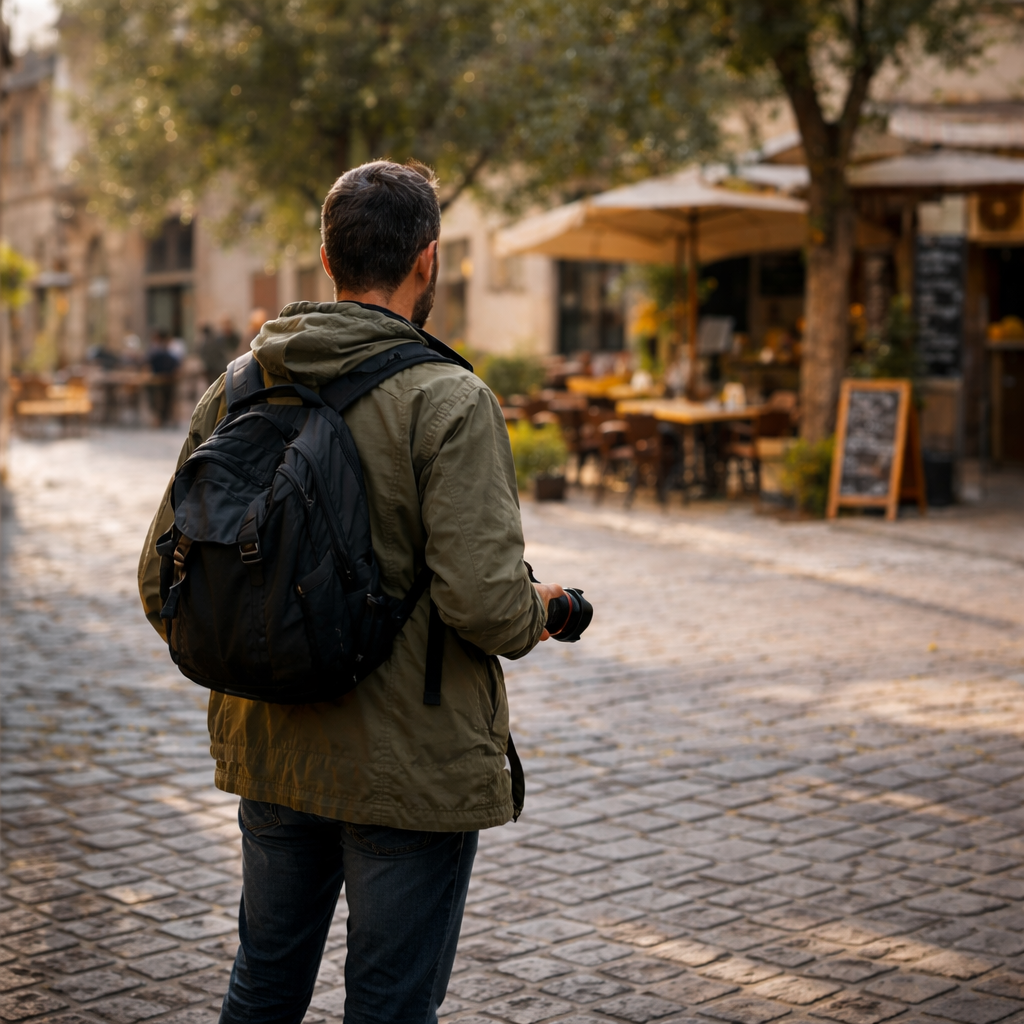
Small changes of position often reveal how a photograph begins to take shape.
Why practising only with explanations feels confusing
Many beginners take photographs without clearly seeing why some images work and others do not. In front of a scene, it is often difficult to recognise which elements strengthen the photograph and which ones make the frame confusing.
Photography becomes easier to understand when decisions are connected directly with what is happening in front of the camera. Without that connection, ideas such as framing or composition can remain theoretical. They may make sense intellectually, but they are difficult to recognise while shooting.
Working outdoors makes these relationships clearer because every small decision produces an immediate visual result.
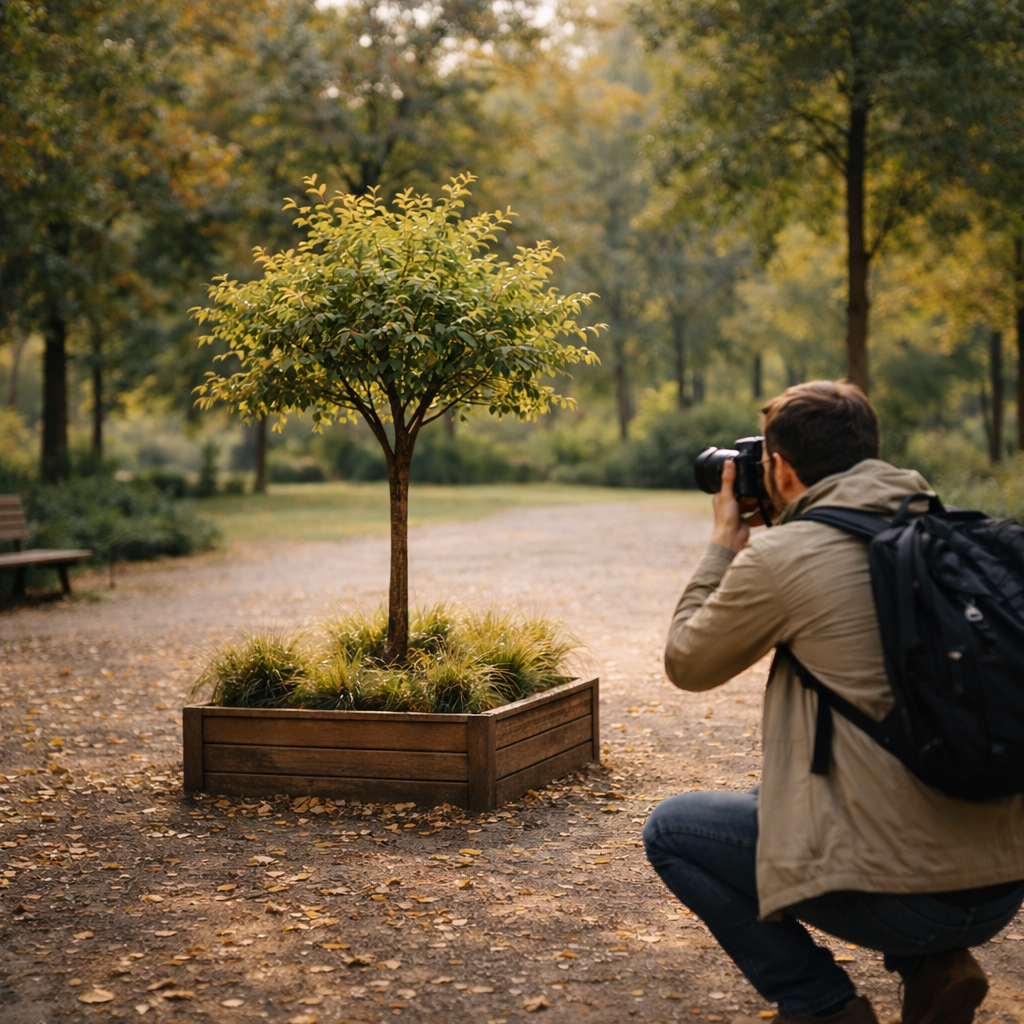
Photographic decisions become clearer when they happen directly in front of the scene.
Practice first, explanation afterwards
For this reason, practice in real environments plays a central role in the Pentaprisma approach. Instead of separating explanation and practice, the process begins with photographs taken in the street. Those images then become the starting point for conversation and reflection.
But those explanations are not given in the middle of movement or distraction. They happen in calm places, often in the shade, where the screen of the camera or the iPad can be seen clearly and the photographs can be discussed with more precision. In that way, the outdoor session remains lively without losing the quality of careful observation.
Once the place supports concentration, the method becomes easier to recognise in practice. Simple exercises help reveal how photographs are constructed, questions about composition begin to appear naturally inside the frame, and reviewing images together introduces the role of editing.
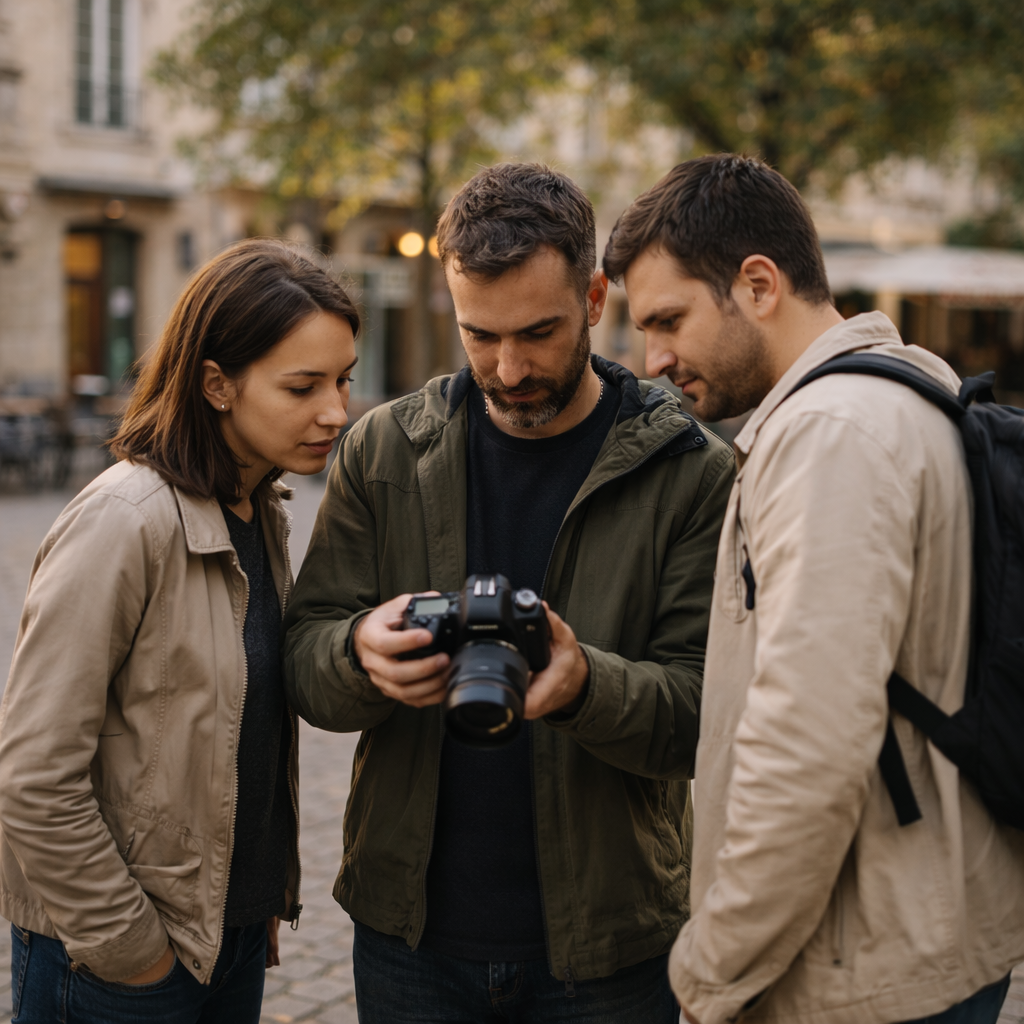
Looking at the photographs taken a few minutes earlier helps connect decisions with results.
Learning where photographs actually happen
Seen this way, practising photography outdoors is not simply about finding interesting subjects. It is about working in the same environment where photographs are actually made.
Observation, movement, framing and light interact in real time. And it is often in those quiet moments outside — looking carefully, moving slightly, and trying again — that the logic of photography becomes much easier to understand.
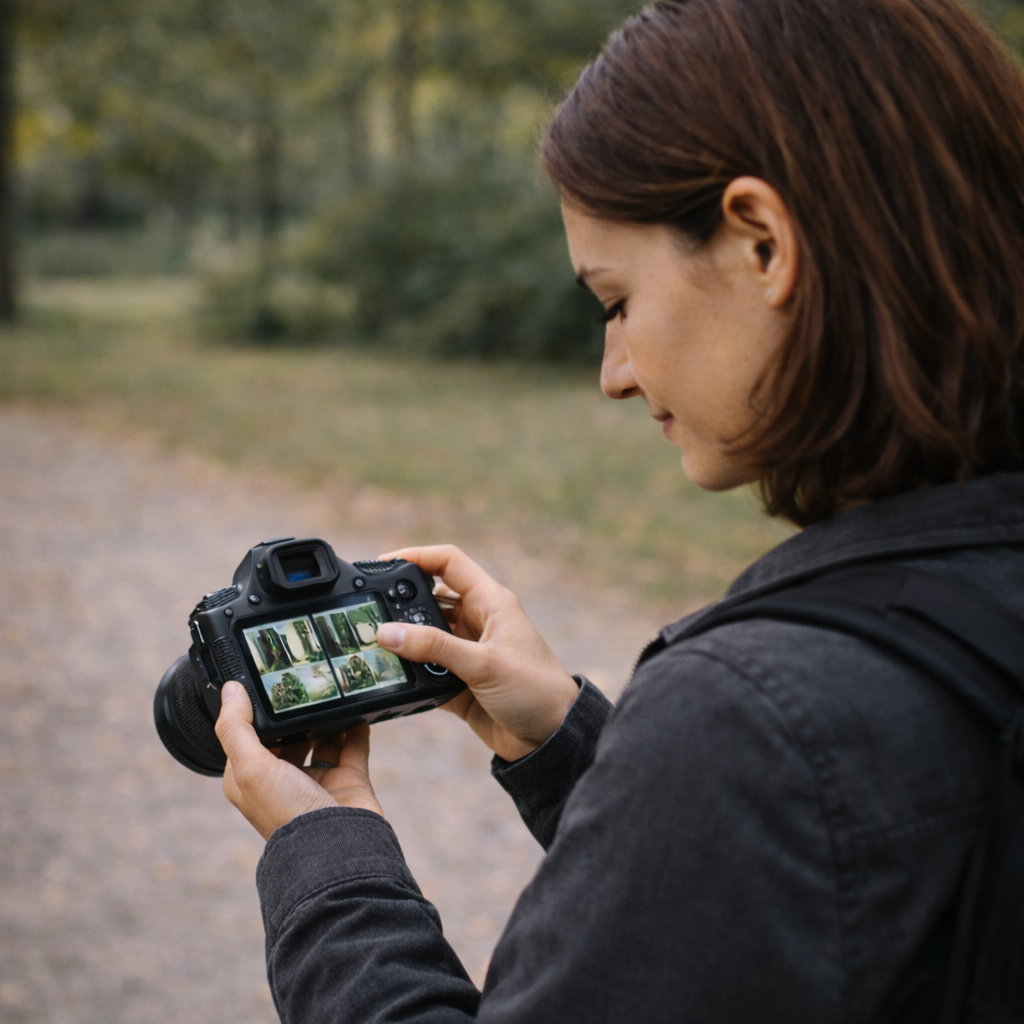
Comparing similar images helps understand how small changes affect the photograph.
Pentaprisma Workshops are offered in selected locations.
Barcelona · Gran Canaria · Madrid · Berlin