Why starting with practice helps beginners learn photography

Beginning with photographs creates something concrete to observe and question.
Many beginners approach photography as if it were something that must be understood before it can be practised. They read explanations about exposure, memorise rules of composition and watch demonstrations of camera settings. Yet when they finally start photographing, the experience often feels confusing. The knowledge may be there, but the decisions inside the frame still feel uncertain. A different starting point can change this. Instead of beginning with explanations, it can be more useful to begin with photographs. Taking pictures first creates something concrete to look at. Once an image exists, it becomes easier to ask meaningful questions about it.
Why theory alone often feels abstract
This idea may sound simple, but it addresses one of the most common difficulties for beginners. When learning begins with theory alone, the concepts remain abstract.
It is difficult to understand why composition matters without seeing how a real frame becomes cluttered. Exposure feels technical until a photograph is clearly too dark or too bright.
Without images to examine, learning easily turns into memorising ideas instead of understanding decisions. A beginner may recognise the name of a concept but still feel unsure when standing in front of a real scene. The gap between explanation and action remains unresolved.
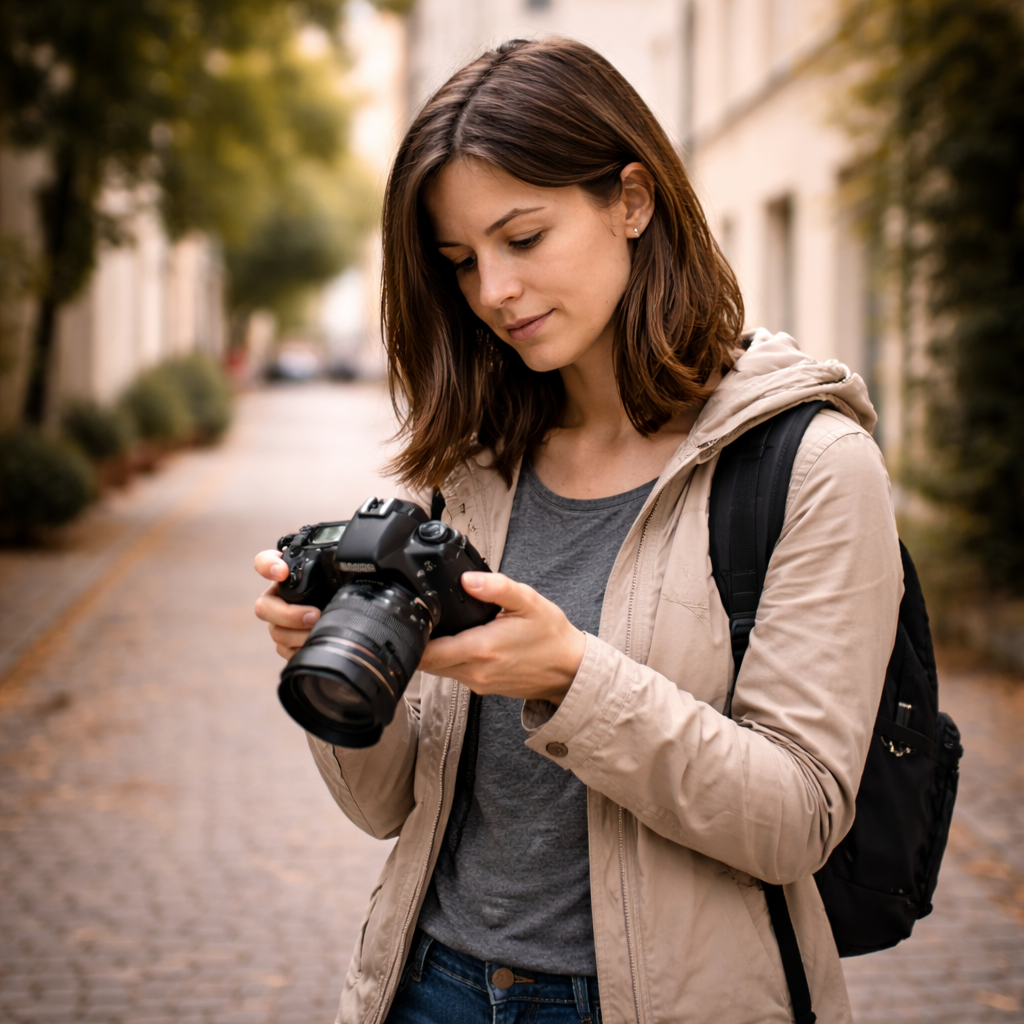
Seeing the result immediately helps connect decisions with the image.
The idea behind inverse learning
In Pentaprisma this difficulty is approached from a different direction. Instead of starting with theory and applying it later, the process begins with photographs.
This approach can be described as a form of inverse learning. First, simple situations are photographed. The images are then reviewed together. Only afterwards are the concepts introduced, and only in the measure that they help explain what is already visible in the photographs.
In this way the explanation becomes a response to a real image rather than an abstract lesson.
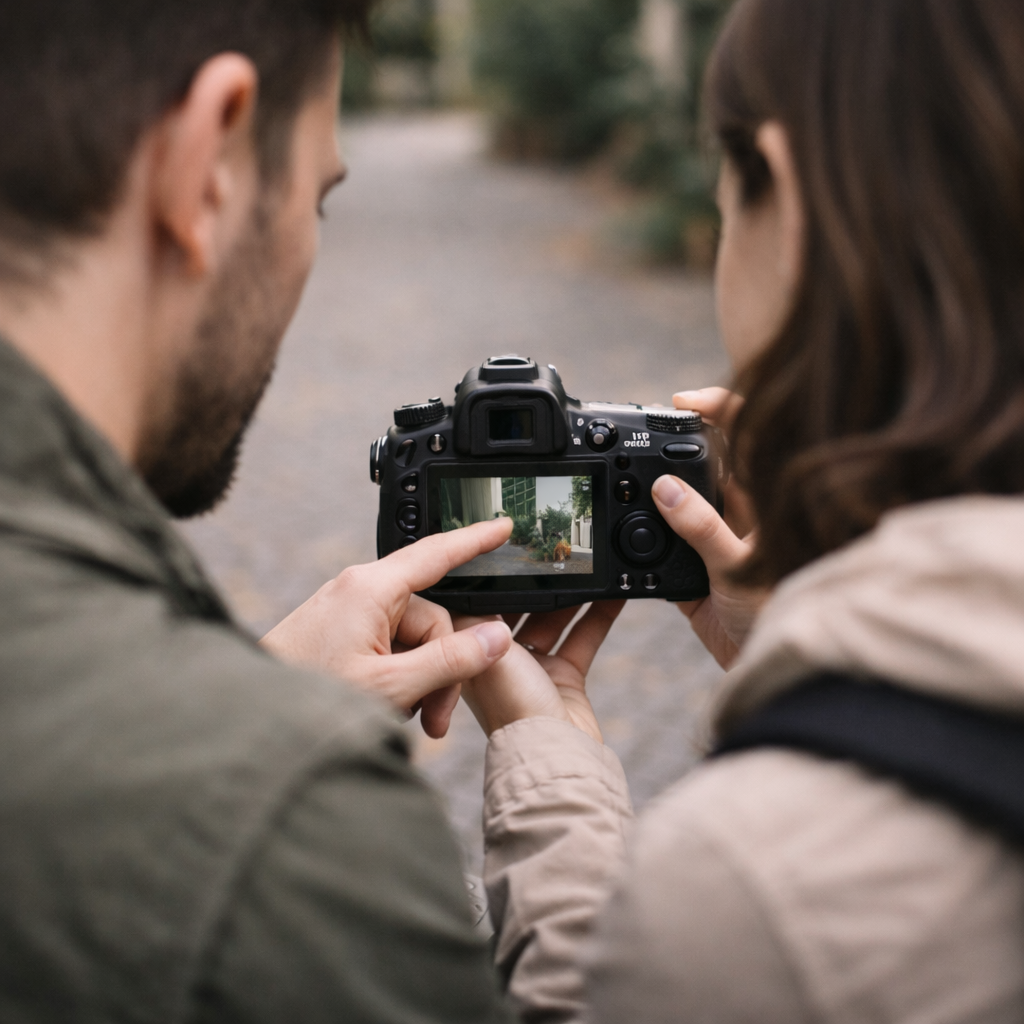
Discussing photographs taken moments earlier turns practice into understanding.
When photographs come first
Once beginners start working this way, learning tends to become clearer. Each photograph becomes part of a feedback loop: a picture is taken, observed, reconsidered and then followed by another attempt.
Through this repetition certain relationships begin to appear naturally. Changing position alters the background. Simplifying the frame clarifies the subject. Small adjustments affect the exposure.
At that point, the method starts to take shape. Simple exercises reveal how photographs are constructed, questions of composition start to appear inside the frame, and calmly reviewing the images introduces the role of editing.

Comparing similar images reveals how small decisions change the photograph.
Reversing the order of learning
Starting with practice does not mean ignoring theory. It simply changes the order in which understanding appears.
The photograph comes first. The explanation comes afterwards.
When learning follows that sequence, ideas connect much more easily with what the photographer is actually seeing through the camera.
Pentaprisma Workshops are offered in selected locations.
Barcelona · Gran Canaria · Madrid · Berlin