The simple exercise that reveals why your photos don’t work
Most people photograph by reacting quickly to what catches their attention. A door, a shadow, a person walking past. One or two pictures are taken, perhaps with a small variation, and then the photographer moves on to something else. At first this feels natural. The world offers many possible subjects, and it seems logical to keep exploring. But this habit often hides an important problem: when every photo is taken in a new situation, it becomes difficult to understand why some images work and others do not. A very simple exercise can reveal this immediately.
A small area, a short time
The exercise begins by limiting the situation as much as possible. Instead of walking through a neighbourhood searching for subjects, the photographer stays within a very small area — roughly the size of a small square or street corner.
For a few minutes the task is simple: photograph whatever seems interesting inside that space.
Most people quickly notice a pattern. They photograph many different subjects, but usually take only one or two pictures of each. The camera moves constantly from one object to another.
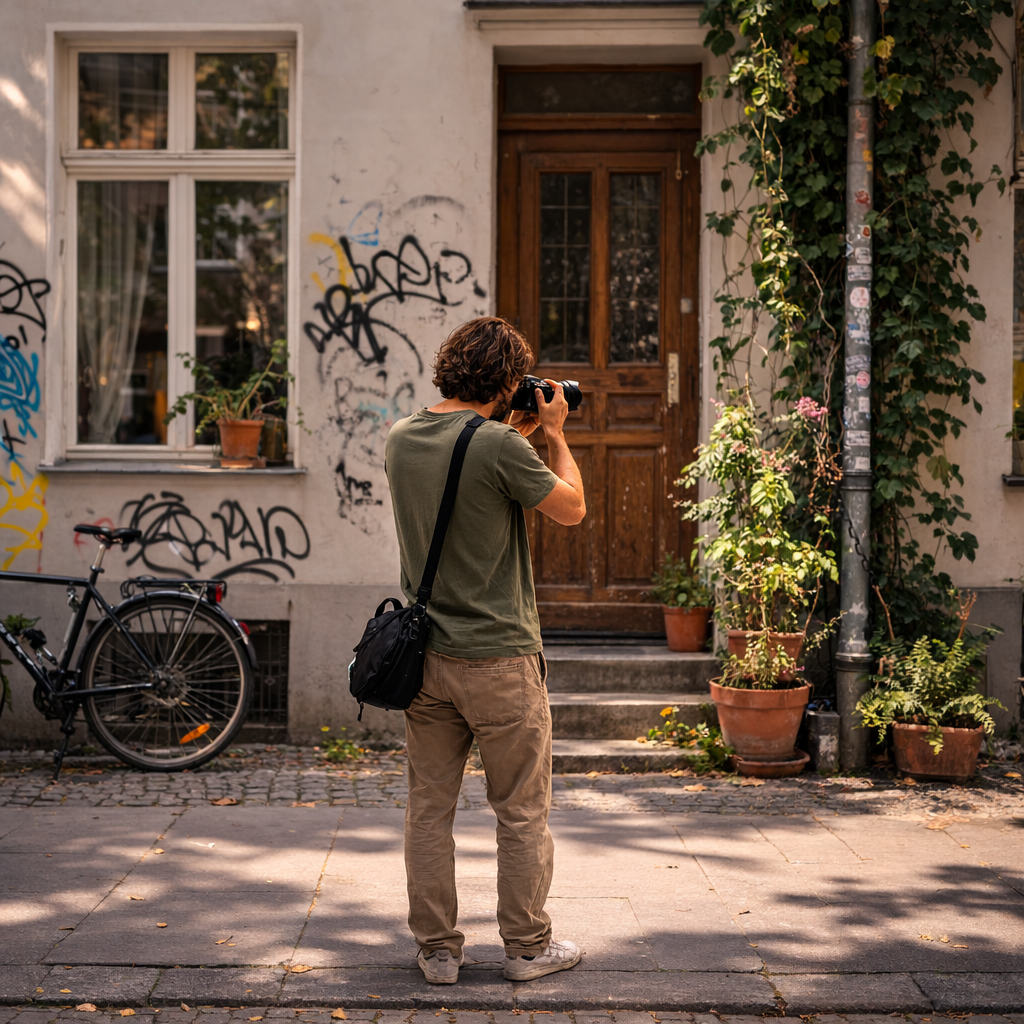
The pattern that usually appears
When those photographs are reviewed afterwards, something becomes clear. Because each subject was photographed only once or twice, there was little opportunity to explore the possibilities of the scene.
This is what makes the exercise so revealing. Many beginners can already recognise that the photographs are not fully resolved, even before they know much about technique or composition. They sense that something could have been done differently, but they are not yet sure what.
That moment matters. It shows that the problem is often not a lack of visual sensitivity, but leaving the scene before that sensitivity can turn into a better decision.

The first version feels correct, but still a little ordinary.
The second step of the exercise
The exercise then repeats under slightly different conditions. Instead of photographing many subjects, the photographer chooses only one and stays with it.
The task now is to explore that single subject from several perspectives. Move closer and farther away. Change position. Try horizontal and vertical framing. Notice how the background changes. Observe how the light affects the subject.
Very quickly the photographer begins to see how small decisions transform the photograph. A distracting background disappears. The subject becomes clearer. The image starts to feel more deliberate.
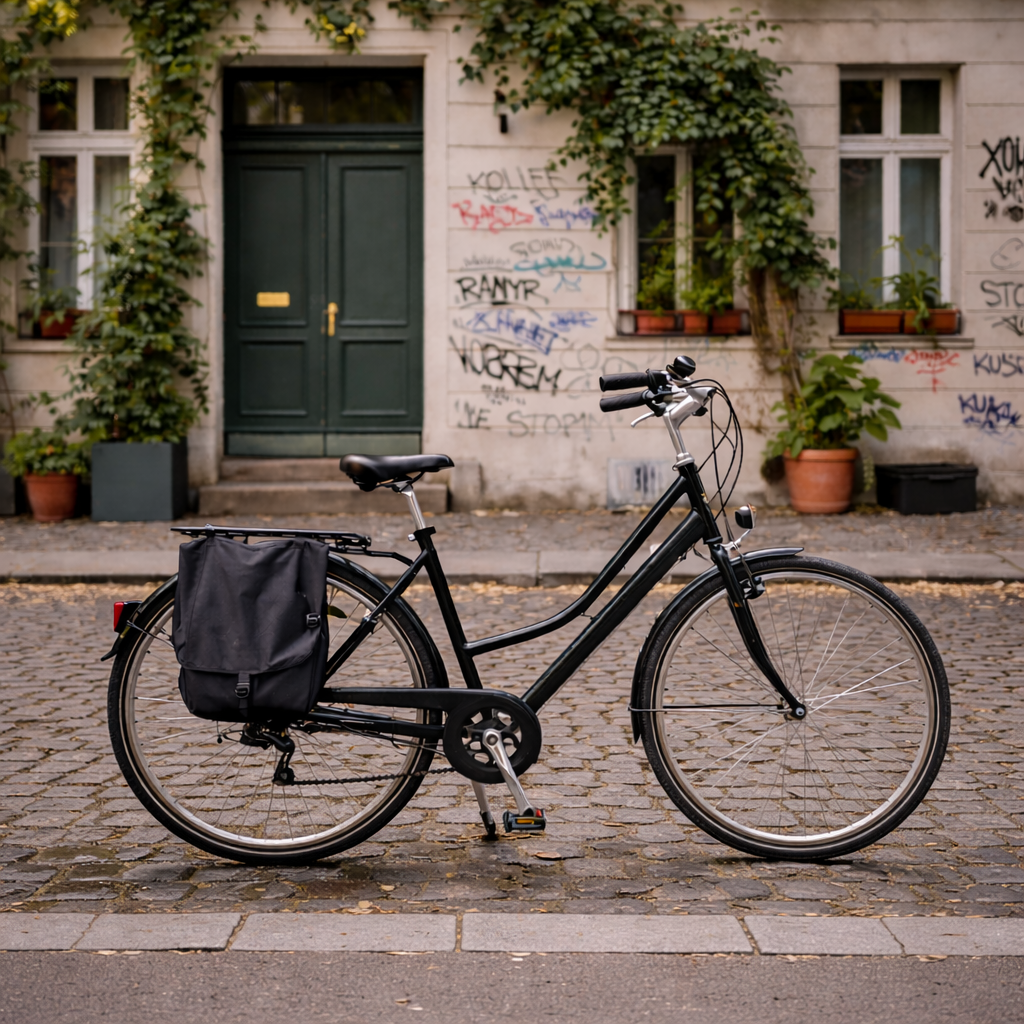
A change in position makes the image cleaner and more intentional.
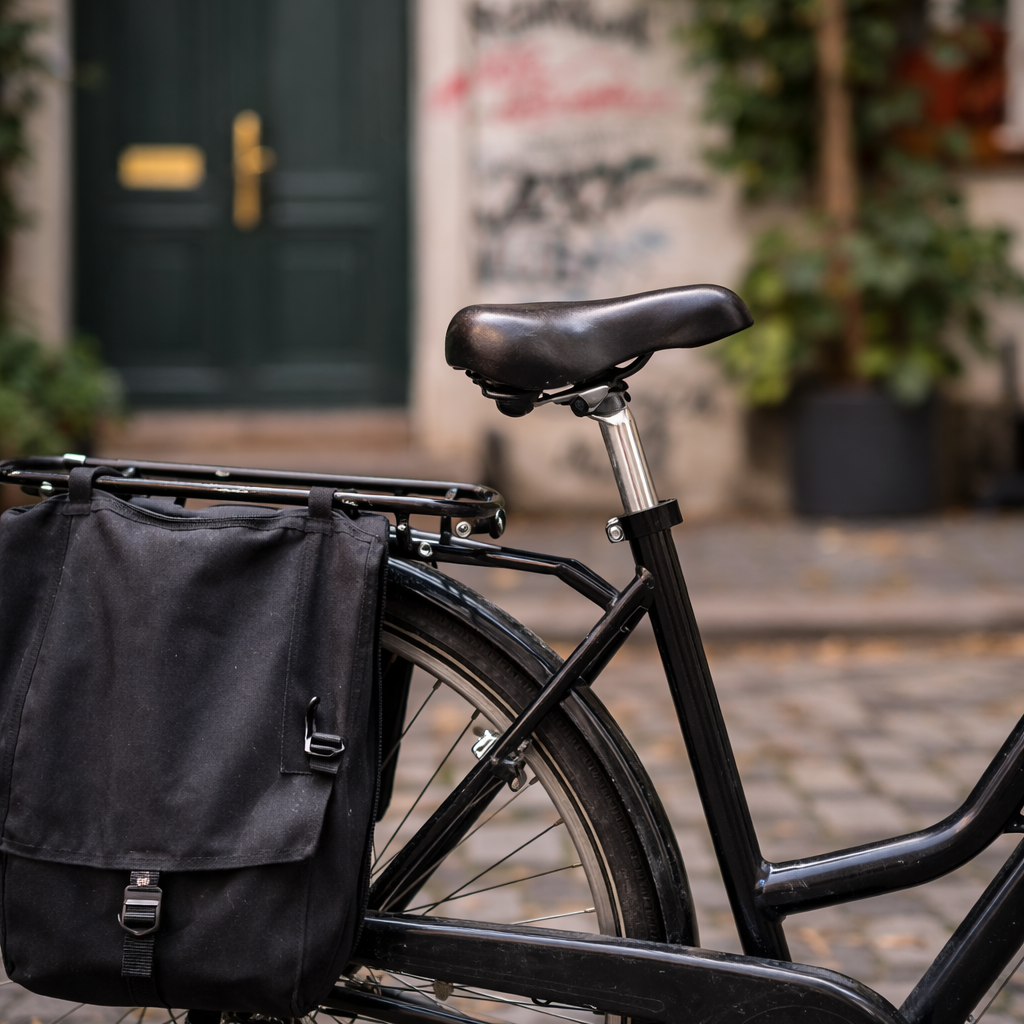
Moving closer simplifies the frame and gives the subject more presence.
Why the exercise works
What this exercise reveals is not only a technical issue but a way of seeing.
When photographers move constantly between subjects, they rarely stay long enough to understand what is happening inside the frame. But when attention is focused on one simple situation, something else becomes visible: they often already know that the first image is not the only possible one.
Within the Pentaprisma method, practising situations like this is the basis of many Pentaprisma exercises. They help photographers slow down and notice how photographs are constructed before moving on to more complex scenes.
A small change in rhythm
The lesson is simple. Photographing more slowly often reveals more than photographing more.
Staying with a subject for a few minutes can show how position, framing and background affect the image. And once those relationships become visible, many of the frustrations beginners experience start to make much more sense.
Sometimes the clearest way to understand why a photograph does not work is simply to stay with the scene a little longer.
Pentaprisma Workshops are offered in selected locations.
Barcelona · Gran Canaria · Madrid · Berlin